Before we conclude 2019 and the decade, let’s make
sure everything is checked off for the holidays:
—
Holiday shopping (all online) √
—
Papers, Exams, Grades, Meetings, Fantasy
√
—
Christmas lights/tree/parties √
—
Year End Tax Planning (are you kidding)
The big question every year at this time: am I a
Grinch or a Santa this holiday season?

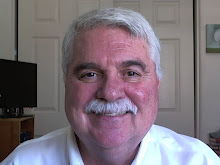
The picture tells all – a Grinch. An accumulation of
social media, ten cent big shots, POTUS, Detroit professional sport teams, Fox
News, MSNBC, CNN, have all taken their toll. Time to hide out for a week: a
couple of hockey games, Netflix, Amazon Prime, a great reading list, a few golf
days, a number of recommendation letters (yes, I like writing these letters),
and no knuckleheads – should do the trick.
SANTA LIST –
Two things Santa for this holiday:
1). No more bullies
2). No more cancer, alzheimer’s, or dementia.
A tall order, but anything you can do will be
appreciated.
ST. NOWHERE - 20%–25% of U.S. health care spending is wasted annually, according to
new research published last week in the Journal of the American Medical
Association. That made us go “wow” but also “eh, kinda makes sense,”
considering the U.S. spends more than any other country on health care at
nearly 18% of GDP.
FYI, the study’s lead author is the chief medical
officer of health insurer Humana.
Back to the numbers: At least $760 billion of annual
U.S. health care spending is considered wasteful. Breaking that down...
$266 billion is flushed down the toilet on
administrative costs, the greatest source of waste.
Pricing failure accounts for $231 billion to $241
billion in waste.
Other ways we’ve managed to throw money down the
drain: Over treatment and low-value care, fraud and abuse, and failure of care
delivery.
Now that we’ve identified the problem, we can fix
it...right? Right?
CAN WE TALK
ABOUT RECESSION? - Because these mixed messages are
making it really hard to define the relationship. The labor market remains
strong and low interest rates have helped stocks—but recent weak economic data
has some investors questioning how long this decade's expansion will stick
around.
The red flags: Last week, ISM said the U.S. services
sector grew at the slowest clip since August 2016, while November’s
manufacturing reading was the worst in a decade.
That’s chilled sentiment among execs, who definitely
don’t mean it when they say “I’m fine.” Last month, a Duke survey found
optimism among CFOs was at a three-year low. Plus… One Fed Bank of New York
measure currently suggests there’s a nearly 40% chance of a recession over the
next year, the highest likelihood so far in this bull market.
A Bank of America Merrill Lynch survey recently
showed recession concerns at the highest point in a decade.
But we haven’t hit deal breaker territory yet. November’s
jobs report wasn’t the best, but it still 1) showed the economy adding jobs at
a steady rate 2) confirmed unemployment is near multi-decade lows.
We’re still playing wait and see:
Earnings season is in a couple of weeks—analysts
expect earnings to have fallen about 4% in Q4. They’ve also lowered
expectations for all 11 sectors in the S&P.
Most economists and four out of five dentists agree
that the eventual nosedive won’t be as gnarly as the financial crisis. But it
will happen...the question is when.
Most of the economic gifts President Donald Trump is
going to get for 2020 are already unwrapped and out from under the tree. The
Federal Reserve slashed rates and went dark. The phase one China deal is pretty
much done. So is the new NAFTA.
That leaves one big question for a recently
impeached president as he heads for a dicey reelection bid: What's left to
goose markets and the economy beyond what most expect will be a pretty blah
2020?
Even blah — a 2 percent-or-so growth rate with
unemployment still near or below 4 percent — could be enough to help Trump
overcome a low approval rating and win again. But if he really hopes to romp
over the eventual Democratic nominee, he'll probably need markets to keep
popping and growth to bubble higher, especially in the industrial Midwest. And
it is far from obvious how the United States can get there from here.
MARKET WEEK
- The 10-year break-even rate—a gauge of annual inflation expectations
derived from the yield differential between the 10-year Treasury note and the
comparable inflation-protected security—settled Friday at around 1.79%,
according to Tradeweb. That was unchanged from Thursday but up from 1.64% at the
end of last month. Bets on higher inflation have gained momentum as investors
have grown more confident about the economic outlook.
Travis Kalanick’s ride at Uber Technologies is
nearing an end. The co-founder of the ride-hailing giant has sold more than
$2.5 billion of stock in the past seven weeks, more than 90% of his stake—a
pace that if continued could see him sold out entirely in the coming days. Mr.
Kalanick, the former chief executive, was pushed out of that role by investors
in 2017.
On this day
in 1913, the Federal Reserve Act, authorizing the creation of the Federal
Reserve System to monitor the nation’s banks and modulate the money supply, was
signed into law by President Woodrow Wilson.

Stocks to Watch: Boeing: The company’s plan to ferry astronauts into orbit faces a
three-month delay if it’s required to make a second test flight of its
Starliner space capsule, which landed successfully Sunday morning after a
curtailed first launch.
Walt Disney: After mixed fan reaction and thumbs-down from most critics, “Star Wars:
The Rise of Skywalker” took in an estimated $175.5 million in the U.S. and
Canada, the lowest opening of the trilogy produced by Disney.
PG&E: The utility arm of PG&E reached an agreement with several customer
advocacy, labor and safety groups that calls for state regulators to allow the
company to pass on to consumers some rate increases.
BEST
PERFORMING STOCKS OF THE DECADE -

COLLEGE
CHRONICLES – Two words on the state of higher education these
days: Dysfunctional Mediocrity. Let us all work on this in the coming New Year.
RECORDS – A new personal record was broken this past week; yours truly was cc’d
twenty-three times as a “reply all” in an email on a topic I am still trying to
figure out the point of the email. Management 101 at it’s very best.
IRS DATA - In the aggregate, the 2018 tax-filing season looked the same as it did
the year before, with 79% of taxpayers getting refunds averaging $2,879, down
only slightly from 80% and $2,908. But those totals mask some significant
variation by income, according to newly released IRS statistics from tax
returns filed through October 1.
These preliminary tallies provide the first hard
data from the government about the actual refunds, deductions and taxes
reported at different income levels in the new system. ... The fresh data shows
that while refund statistics barely budged for lower- and middle-income
workers, real movement occurred toward the upper end of the income
distribution. Average refunds for taxpayers making between $100,000 and
$250,000 dropped 10%, while average refunds for those between $250,000 and
$500,000 rose by 11%.
TOP FIVE – TOP FIVE BEST AIRPORTS
1. San Diego
International Airport (SAN)
2. Phoenix Sky
Harbor International Airport (PHX)
3. Portland
(Oregon) International Airport (PDX)
4. Hartsfield-Jackson
Atlanta International Airport (ATL)
5. Sacramento
International Airport (SMF)
BIRTHDAYS
THIS WEEK – Birthday wishes and thoughts this week to Christina Coughlin
…famous student athlete, Kirk Douglas, St. Lawrence ’39 (103), Jane Fonda (82),
Nancy Newman …famous Rink Rats reader, USGA (125).
POLITICS 101 - The House and Senate are out for
Christmas.
President Trump will spend the Christmas period at his Mar-a-Lago
club in Palm Beach, Florida.
The only event on Trump's public schedule, per a White House
official, is that on Tuesday he will join "a video teleconference with
members of the military."
THE PRESIDENT’S PARTY - By
the summer of 2017, Dave Trott, a two-term Republican congressman from
Birmingham Michigan, was worried enough about President Trump's erratic
behavior and his flailing attempts to repeal the Affordable Care Act that he
criticized the president in a closed-door meeting with fellow G.O.P. lawmakers.
The response was instantaneous — but had nothing to do with the
substance of Mr. Trott's concerns. 'Dave, you need to know somebody has already
told the White House what you said,' he recalled a colleague telling him. 'Be
ready for a barrage of tweets.
Mr. Trott got the message: To defy Mr. Trump is to invite the president's
wrath, ostracism within the party and a premature end to a career in Republican
politics. Mr. Trott decided not to seek re-election in his suburban Detroit
district, concluding that running as anti-Trump Republican was untenable, and
joining a wave of Republican departures from Congress that has left those who
remain more devoted to the president than ever. ...
Just under four years after he began his takeover of a party to
which he had little connection, Mr. Trump enters 2020 burdened with the ignominy
of being the first sitting president to seek re-election after being impeached.
But he does so wearing a political coat of armor built on total loyalty from
G.O.P. activists and their representatives in Congress. If he does not enjoy
the broad admiration Republicans afforded Ronald Reagan, he is more feared by
his party's lawmakers than any occupant of the Oval Office since at least
Lyndon Johnson.
HOLIDAY
PARTY CIRCUIT – SPOTTED at the Huntington Library in
Pasadena, CA. an alumni reception for St. Lawrence University Southern
California alumni: President Bill Fox ’75 and his wife Lynn, Tricia Gomer ’74,
Barry and Pat Phelps ’69.
DEMOCRATS:
PRE & POST REAGAN DIVIDE - Democratic
leaders like [Speaker] Pelosi, Joe Biden, Steny Hoyer and Chuck Schumer were
shaped by their traumatic political coming-of-age during the breakup of the New
Deal coalition ... and the backlash that swept Democrats so thoroughly from
power nearly 40 years ago.
The Ocasio-Cortezes of the world have witnessed the
opposite: The way they see it, Democratic attempts to moderate and compromise
have led to nothing but ruin. Republicans aren’t the ones to be afraid of.
BEIJING 2022
- Sens. Rick Scott and Josh Hawley have called on NBCUniversal, which has
broadcast rights for the Olympics, to refuse to air the 2022 Winter Games in
Beijing.
Consider this the opening shot in the struggle
between human rights advocates, who believe that a country currently operating
concentration camps should not host the Olympics, and the Chinese Communist
Party, which will defend its successful bid to host the 2022 games at all
costs.
In a letter dated Dec. 19 and addressed to top NBC
executives, Scott and Hawley point to China's "abysmal" human rights
record.
By agreeing to air the Beijing Olympics, the
senators write, NBC is "placing profits over principles and ensuring that
China can be accepted into the international system even as it violates its
basic rules and tenets."
The lawmakers also warn about China's mass
surveillance regime, pointing to recent leaked government documents that reveal
how the Chinese security state is using mass data collection for predictive
policing and mass detention.
The Chinese Communist Party has built a
vast network of detention camps, where it holds over a million Uighur Muslims
in a sweeping attempt to stamp out their culture and religion.
Recent leaks of classified Chinese government
documents revealing the inner workings of its mass detention camps have
galvanized government officials in the U.S. and Europe to ramp up pressure on
Beijing.
The run-up to the 2008 Beijing Olympics saw global
protests against China's human rights abuses. Expect the 2022 Olympics to
generate just as much controversy — though this time, China has far more
economic and diplomatic leverage to push back.
COLLEGE
FOOTBALL 150 - 1869: College football was born on
Nov. 6, 1869, when Rutgers beat the College of New Jersey (now Princeton), 6-4,
in a game that looked more like soccer or rugby than modern football.
1880s: In December 1889, an amateur athletics
magazine called "The Week's Sports" published the names of 11 college
football players — the first-ever "All-America" team.
The concept was created by Walter Camp, aka
"Father of American Football." Among his inventions: the line of
scrimmage, the system of downs and the scoring system.
1900s: At the turn of the century, questions about
violence threatened football's existence, so much so that President Teddy
Roosevelt got involved. Numerous rule changes were made, including the 1906
legalization of the forward pass.
In 1903, Princeton and Yale met in the championship.
Fortunately for us, Thomas Edison sent a cameraman to film, so we have
footage!!
1920s: The 1920s were considered the "Golden
Age of Sports" in the U.S. For the first time, large numbers of post-war
Americans were willing to pay money to attend sporting events.
Baseball and boxing were king, but college football
crowds reached 100,000 fans for the first time and massive new stadiums were
constructed to keep up with demand.
1940s: When the U.S. entered World War II, football
became an integral part of military training at colleges around the country and
resulted in schools like Army and Notre Dame building superpowers.
Military leaders began to emphasize the purported
link between college football and military preparation. A Navy commander ...
even turned it into a chant: Football! Navy! War! And this spiritual link
between football and war ... would prove the salvation of the sport.
The modern era: 1950s: With some of the wartime
powers fading, the 50s featured national champions like Maryland, Tennessee,
UCLA, Michigan State and Syracuse. Meanwhile, Oklahoma won a record 47
consecutive games.
1960s: In what was dubbed the "Game of the
Century," Notre Dame and Michigan battled to a 10-10 tie in 1966. It was
only the 10th meeting between teams that were ranked Nos. 1 and 2 in the AP
Poll.
1970s: The 70s were all about the wishbone offense
and superstar RBs like Tony Dorsett (Pitt), Earl Campbell (Texas), Billy Sims
(Oklahoma) and Archie Griffin (Ohio State) — the only two-time winner of the
Heisman Trophy.
1980s: This was a decade defined by swagger (it's
all about the "U," baby) and scandal (SMU got the death penalty in
1987). And let's not forget Barry Sanders' 1988 campaign — the best individual
season ever.
1990s: Three of the first seven years featured split
championships — 1990 (Colorado, Georgia Tech), 1991 (Washington, Miami), 1997
(Michigan, Nebraska) — which led to the creation of the Bowl Championship
Series (BCS) in 1998.
2000s: Here are some names from the All-2000s team
(chosen in 2009): QB Tim Tebow, RB Adrian Peterson, RB Darren McFadden, WR
Larry Fitzgerald, WR Michael Crabtree, TE Kellen Winslow, DE Terrell Suggs, LB
Patrick Willis, S Ed Reed (full roster).
2010s: Auburn won the 2010 championship, but their
rivals in Tuscaloosa have dominated the decade — though Crimson Tide alum Dabo
Swinney has built an emerging superpower to the east.
SWAMI’S WEEK
TOP PICKS
–
NFL Football Pick of the Week – Sunday 12/29, 8:20 PM (EDT), NBC: San Francisco 49ers (12-3) at Seattle Seahawks
(11-4). Final game of the season to determine playoff seating in the NFC. 49ers
win, 34 – 28. (Season to Date 7-4)
College Football Pick of the Week – Saturday 12/28,
4:00 PM (EDT), ESPN: #4 Oklahoma Sooners (12-1) vs. #1 LSU Tigers (13-0).
National semifinal in Atlanta. We like LSU in a rout 42 – 20.
#3
Clemson Tigers (13-0) vs. #2 Ohio State Buckeyes (13-0). National semifinal in
Glendale, Arizona. Clemson wins in a rout 38 – 22. (Season to Date 8-3)
College Hockey Pick of the Week – Saturday 12/28, 7:00 PM (EDT), Prime: #17 Harvard Crimson (6-4-0) vs. #16
Arizona State Sun Devils (10-6-2) at FinePoint Arena, Irvine, California.
Harvard takes this one in Southern California, 5 – 3. (Season to Date
1-0)
NHL Pick of the Week – Saturday 12/28, 7:00 PM (EDT)), CBC: New
York Rangers (17-14-4) at Toronto Maple Leafs (19-14-4). Original Six game,
Leafs are playing better after the departure of Mike Babcock, but the New
Yorkers are playing even better of late: Rangers win in Toronto 3 – 2. (Season to Date 1-0)
2019 Season
to Date (52-32)
“PRIS” HARVEY SCHROEDER – It seem every blog these days we remember a friend who has passed. Priscilla
Schroeder, known to friends as "Pris," passed away peacefully at home
on December 8, 2019, at the age of 85 years. She is remembered as a beloved
wife, mother, grandmother, sister, and friend and advocate for many people.
Born in Syracuse, New York, Pris graduated from
Nottingham High School and St. Lawrence University. In 1956, armed with her
Bachelor of Science degree in Mathematics, Pris became a pioneer in the
computer industry working for General Electric in upstate New York. There she
met another young mathematician named Harold Schroeder, who became her best
friend and life partner for over 61 years. They married in 1958, and daughter
Susan arrived in 1962 and son William in 1964. Once her children entered
college, Pris re-joined the aerospace industry as a Programmer Analyst
Specialist at Rocketdyne and worked there for over 20 years.
Pris loved her alma mater, St. Lawrence University.
Serving on the Alumni Council and organizing events in Southern California, and
she had tremendous pride being in attendance when her grandson, Christopher
graduated from St. Lawrence in May 2018.
A truly remarkable woman, she will always be in my
thoughts and prayers.
Next Blog: Thank God that decade is over.
Until
next time Happy Hanukkah, Happy Festivus,
Merry Christmas, Happy Kwanzaa
To all our
readers from coast to coast, in Canada, South America and Europe, a joyous
holiday and much love.
Claremont,
California
December
23, 2019
#X-12-401
3,057
words, fifteen minute read
CARTOON OF
THE WEEK – The Holidays

RINK RATS
POLL – Your favorite holiday?
_____ New Year’s Day
_____ Easter
_____ Fourth
of July
_____ Halloween
_____ Thanksgiving
_____ Christmas
_____ Other
QUOTE OF THE
MONTH
– “Kindness in words creates confidence. Kindness in thinking creates
profoundness. Kindness in giving creates love.”
Lao
Tzu